The company will showcase new solutions in Mexico City for digital signage, edge computing, and commercial applications that require continuous operation, operating system flexibility, and multi-screen management.
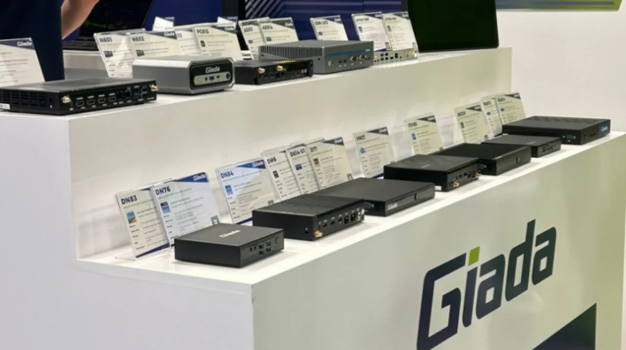
Digital signage is evolving beyond simply displaying content. The integration of artificial intelligence, edge computing, and new software options is expanding its capabilities in retail, hospitality, transportation, corporate environments, education, and other professional applications.
Giada will be attending the 2026 InfoComm América Latina s with a lineup focused precisely on that evolution. At its booth #M630, the company will showcase professional players compatible with various operating systems, new ARM platforms, and solutions designed to integrate artificial intelligence applications.
With 27 years of experience, Giada develops hardware for digital signage and embedded computing. Its portfolio includes players compatible with Windows, Android, Linux, Raspberry Pi, and ChromeOS Flex, designed for professional applications that require 24/7 continuous operation.
The company currently works with clients in more than 80 countries and an international network of more than 180 partners, handling projects in sectors such as retail, hospitality, banking, transportation, and public services.
One of Giada's projects in Latin America is located in Brazil, where its equipment was used for the new "Destination Porsche" store concept.
The project aimed to incorporate digital signage as part of a more immersive shopping experience. To achieve this, Giada D611 and D612 players were used.
According to Lindsey Lee, Giada’s Latin America Sales Manager, graphics capabilities and installation flexibility were key factors for the project. “The D611 supports displays up to 8K and can work with multiple HD screens, which is especially important for a premium brand like Porsche.”
The devices’ compact design also made it possible to install them using VESA mounting behind the screens, keeping the equipment out of visitors’ sight. In addition, Lee points out, they have proven to be very stable since their implementation.
According to the executive, the project demonstrates how the infrastructure operating behind the scenes can directly influence the experience a brand offers within a retail space.
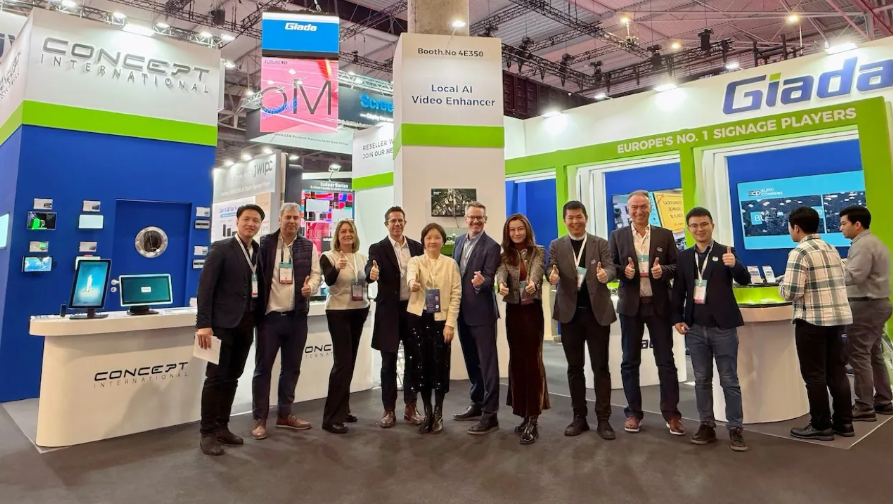
Giada sees growth opportunities in Latin America driven by the digital transformation of various sectors and by projects that require solutions capable of operating continuously.
“Digital transformation continues to accelerate across various industries in Latin America,” Lee notes. “Customers are increasingly seeking professional and reliable solutions that enable 24/7 operation, remote management, and seamless integration with software.”
As such, the company views InfoComm América Latina as both a meeting place for AV professionals and an opportunity to build relationships with integrators, solution providers, channel partners, and end users in the region.
“More than just an industry trade show, ‘InfoComm América Latina’ serves as a strategic platform for companies seeking long-term growth opportunities in one of the AV markets that continues to evolve rapidly.”
One of the key focuses of Giada's participation in "InfoComm América Latina" will be its lineup of multi-OS digital signage players.
The ability to work with Android, Linux, Windows, Raspberry Pi, and ChromeOS Flex is designed to facilitate the development of projects with different software platforms and deployment requirements.
This flexibility is particularly important for system integrators who work on a variety of applications and need to choose between ARM and x86 architectures based on the characteristics of each installation.
Giada will also demonstrate how its platforms can incorporate artificial intelligence processing at the edge, allowing the player to go beyond its role as a mere playback device and participate in smarter applications.
Possible uses include personalized advertising and analytics in retail; visitor management and corporate communications; digital menus and wayfinding systems in the hospitality industry; passenger information in transportation; appointment scheduling and navigation systems in healthcare; educational applications; services for smart cities; and dynamic signage in restaurants and venues.
Among the new products visitors will find at the booth is the Giada DN84-E, the newest addition to the DN84 series.
One of its standout features is support for Power over Ethernet Plus (PoE+), which allows both power and data to be transmitted over a single Ethernet cable. This can simplify installations in locations where there is no easily accessible power outlet near the display.
The device uses the Rockchip RK3576 processor and features an NPU with a capacity of 6 TOPS designed for artificial intelligence workloads.
In addition, it supports Android 14 and Debian 12 and features two HDMI outputs for multi-display setups.
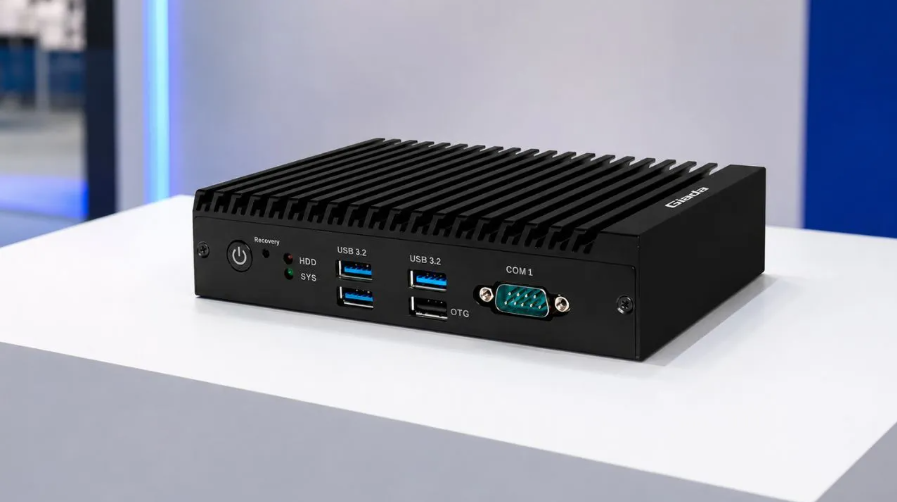
Another new feature of Giada's participation will be the expansion of Linux compatibility within its line of ARM-based media players.
The strategy aims to provide greater freedom to developers and integrators who create customized solutions for digital signage, edge computing, and embedded systems.
Among the platforms the company will highlight are the D77/D77-I series, based on the RK3588 and compatible with Android 15 and Ubuntu 22.04; the DN84/DN84-I/DN84-A series, based on the RK3576 and supporting Android 14, Debian 12, and Ubuntu 24.04; and the DN76, based on the RK3568 and compatible with Android 14 and Debian 12.
This variety allows you to tackle projects with different performance, software, and processing requirements, without being limited to a single operating environment.
Giada is especially looking forward to welcoming system integrators, channel partners, and solution providers involved in digital signage and kiosk projects.
In addition to learning about the new products, visitors will be able to talk with the team about hardware and software customization, BIOS modifications, and integration for specific needs.
“Every project is different,” Lee points out. “We offer a variety of options on ARM and x86 platforms, and we’re open to customization—whether through BIOS adjustments, hardware modifications, or support for software integration.”
The company also seeks to differentiate itself through product availability and supply chain stability, a factor that can be decisive for system integrators who need to meet implementation deadlines.
For Lindsey Lee, the meeting in Mexico City will be an opportunity to bring these discussions directly to the region’s professional community.
“We invite attendees to visit Giada’s booth #M630 to explore our professional digital signage solutions and embedded computing platforms, and discover how we can help them create smarter, more connected digital experiences.”
Sign up today and come to the 2026 "InfoComm América Latina"!


 Inquiry
 Download
 Technical Support
 RMA
 Events