As the Internet of Things (IoT) continues to grow and reshape industries, the demand for efficient, scalable solutions to manage and control IoT devices is on the rise. One of the key components driving this evolution is the General Purpose Input/Output (GPIO) interface, which has become an essential feature in numerous applications, from smart vending and access control to interactive kiosks and digital signage.
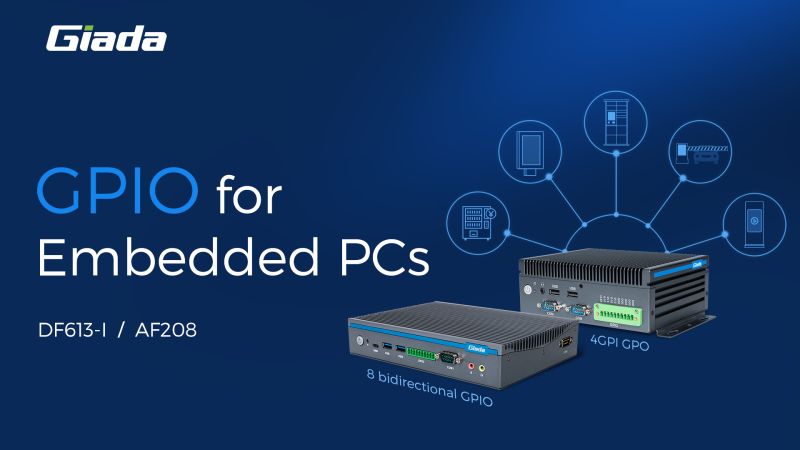
GPIO is a versatile interface that allows IoT devices to interact with various peripherals such as LEDs, buttons, and sensors. It provides an easy and effective way to control these components, making it a vital part of many IoT solutions. Whether you’re looking to power up LEDs, read sensor data, or activate certain functions based on user input, GPIO simplifies the process and enhances device performance.
Giada has taken the importance of GPIO to heart, offering embedded PCs like the DF613-I and AF208, both of which come with built-in GPIO functionality. These devices offer:
DF613-I: 8 bidirectional GPIO on a 10-pin phoenix interface
AF208: 4 GPI + 4 GPO on a 10-pin phoenix interface
These built-in GPIO options make controlling sensors, LEDs, and buttons more efficient and straightforward for developers and manufacturers alike.
Reliable Control of Sensors and Devices: Built-in GPIO ensures stable and consistent management of peripherals, crucial for the performance of IoT systems.
Simplified System Design: Integrating GPIO directly into the embedded PC reduces the need for additional external components, streamlining the design and reducing complexity.
Faster Time-to-Market: With GPIO functionality already included, developers can focus on creating the application rather than worrying about additional hardware integration. This means faster prototyping and quicker deployment.
The potential applications for GPIO are vast and varied. In smart vending machines, GPIO can be used to manage product dispensers, control the lighting, or interact with user input devices. For access control systems, GPIO facilitates the operation of locks, sensors, and alarms. In interactive kiosks and digital signage, GPIO enables dynamic content and user interaction, driving engagement and functionality.
As IoT adoption continues to expand across industries, the role of GPIO in simplifying device control and enhancing functionality cannot be overstated. With built-in GPIO capabilities like those found in the Giada DF613-I and AF208 embedded PCs, developers and manufacturers can bring more reliable, faster-to-market solutions to the table.
If you’re looking for a way to make your IoT devices more powerful and easier to manage, consider the benefits of built-in GPIO in your next project.



 Inquiry
 Download
 Technical Support
 RMA
RMA Events