The New Tension in Embedded and Edge Computing
As AI applications and data-intensive operations grow more complex, the demand for computing performance at the edge is rising sharply. The conflict is clear: higher performance versus lower energy footprint. Navigating this tension has become a central challenge in modern embedded system design.
Chasing raw performance is no longer sufficient. Instead, the focus shifts to efficiency—identifying hardware architecture that delivers required computational results with minimal energy expenditure.
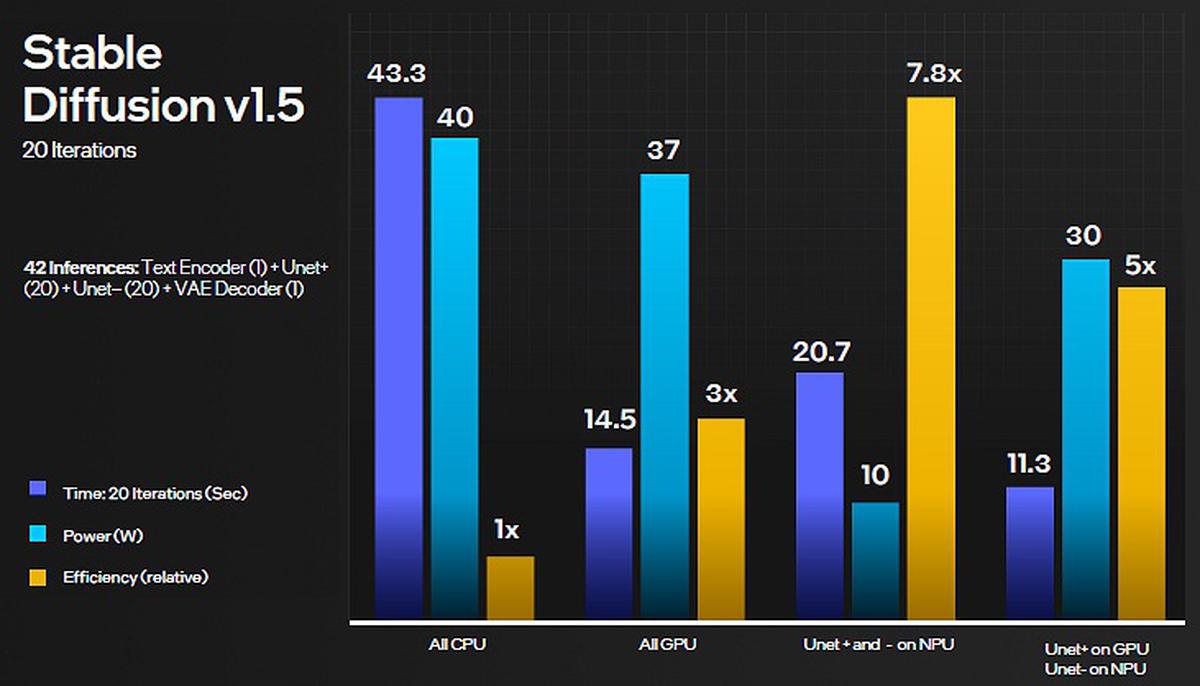
AI performance preview on Meteor Lake. (Source: Intel)
Resource orchestration strategy:
General-purpose tasks
Operational flexibility
Parallel workloads
AI training acceleration
Inference efficiency
Object detection
ARM-based processors typically offer superior energy efficiency in embedded deployments. Their reduced instruction sets and modular scalability suit space/energy constrained scenarios.
| Component | Efficient Choice | Energy Saving |
|---|---|---|
| DRAM | LPDDR4/LPDDR5 | Lower active/idle power |
| Storage | Low-power NVMe SSD | Reduced access latency |
| Memory Controller | Integrated SoC design | Minimized external transactions |
Critical efficiency factors:
Distributed Edge
40% latency reduction
15% total energy saving
Centralized
Consolidated management
Higher thermal density

Hybrid deployment model: Lightweight edge processing + regional data centers for aggregation. Transportation hub case study showed 15% net energy reduction while improving processing response times.
 Source: www.utmel.com
Implementation techniques:
The era of simply pursuing higher performance is over. Today's embedded systems must meet rising computational expectations without compromising energy efficiency. This requires holistic design across four dimensions:
Real-world challenges lead to better designs - share your energy/performance constraints for architecture discussion.



 お問い合わせ
 ダウンロード
 技術サポート
 RMAサービス
 イベント
イベント