NEV Market Trend & Vision Inspection System Analysis
With the rapid growth of the new energy vehicle (NEV) market, the demand for key components is predicted to increase by over 20% annually over the next five years. This surge in demand presents an enormous challenge for automotive suppliers, who must continuously monitor their production lines to maintain efficiency and product quality. To address this, one automotive parts manufacturer has planned to implement a vision inspection system on their bearing automation production line, using industrial computers to run visual inspection software.
The system's task is to perform real-time checks on bearing surfaces, measuring for scratches, dimensional accuracy, and text legibility. It involves continuous image capture via industrial cameras, with the data analyzed by an industrial computer to assess product quality. Non-conforming products are automatically removed from the production line based on the inspection results. This system needs to work in sync with the production line and demands high stability, fast processing, and compatibility with various interfaces.
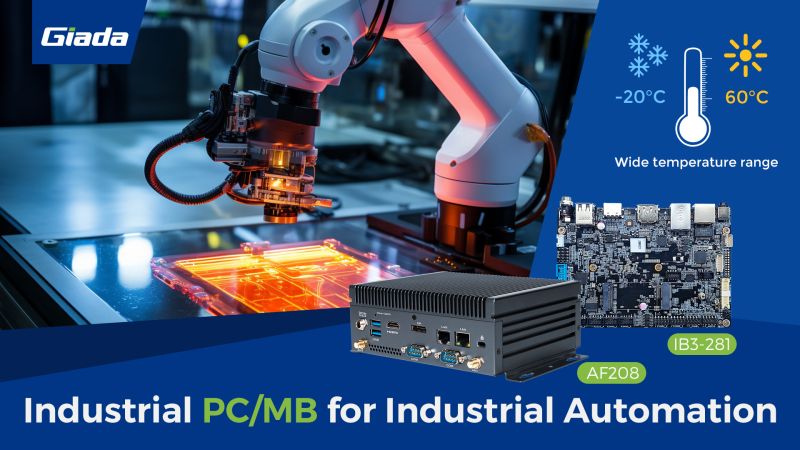
Automated vision inspection system for bearing production line
The system must be installed in the control cabinet next to the production line, capable of functioning in an environment with minimal dust and temperatures ranging from -15°C to 50°C.
It must support 24/7 operation, ensuring continuous and stable performance throughout the year. Relevant testing reports must be provided to ensure reliability.
The inspection system requires basic performance for capturing images from multiple cameras, performing dimensional measurements, and running character recognition algorithms. However, it must avoid excessive performance to keep costs under control.
A rich selection of I/O interfaces is needed, including at least 2 Ethernet ports, multiple USB ports for cameras, mouse, keyboard, etc., 2 video interfaces for connecting display monitors, and at least 2 serial ports for linking to the production line control system's PLC.
To handle large volumes of image data, the system must have at least 8GB of RAM, with 16GB being preferred for optimal performance.
A minimum of 2 years of warranty service is required to reduce future maintenance costs.
In response to these demands, Giada's product engineers and sales team collaborated closely with the customer to select the Giada AF208 embedded industrial computer. Powered by the Intel Processor N97, this unit provides the necessary performance to meet the basic inspection needs of the project.
Optimal balance between cost and performance for vision inspection
Ideal for dusty workshop environments, preventing dust accumulation
Space-optimized for control cabinet installation
The AF208 offers an ideal balance between cost and performance, with a range of I/O options for easy device connectivity. Its fanless design ensures it is well-suited for dusty workshop environments, where dust accumulation could damage traditional fan-based systems. Additionally, the compact size of the AF208 allows it to be installed in the control cabinet, optimizing space usage on the production floor.
By offering the required processing capabilities, connectivity options, and environmental adaptability, the Giada AF208 is the perfect solution for the bearing automation production line's vision inspection system. With reliable operation and a 2-year warranty, the AF208 ensures stable, efficient production with minimal downtime and reduced maintenance costs.
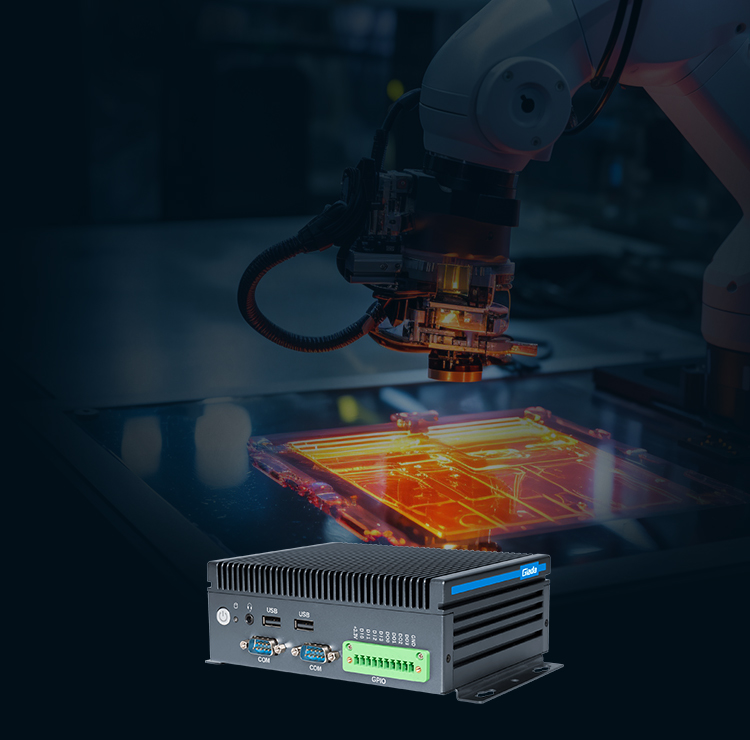
Advanced embedded industrial computer for automation systems
Intel Processor N97
24/7 Continuous
Fanless & Compact
2 Years



 お問い合わせ
 ダウンロード
 技術サポート
 RMAサービス
 イベント
イベント